2026
Call for Papers
WOMEN IN MUSIC
International Conference
23-25 September 2026
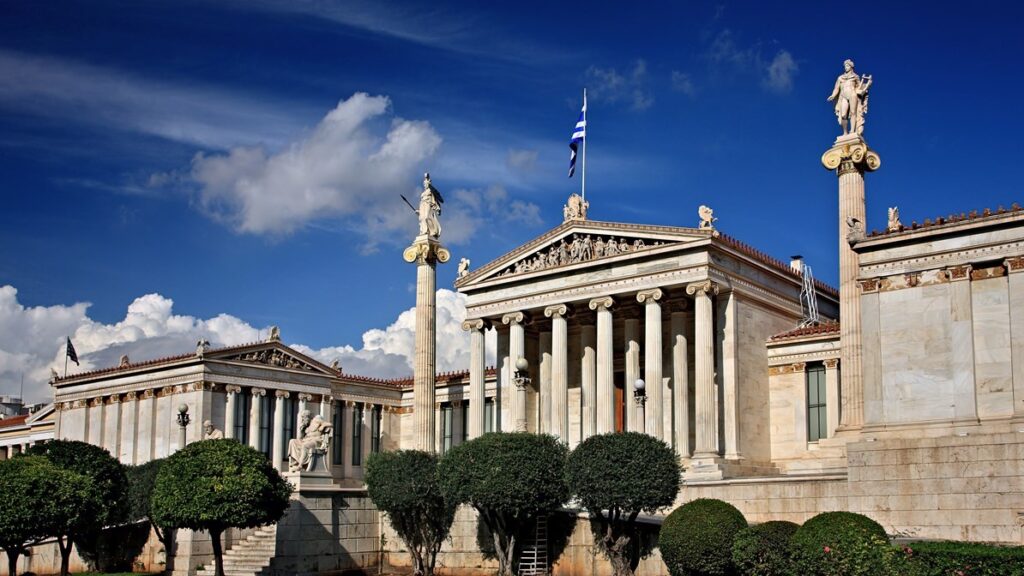
Department of Music Studies, National and Kapodistrian University of Athens, Greece
In collaboration with the Royal Musical Association Music of Eastern Europe and Eurasia Study Group
Venue: Ioannis Drakopoulos Amphitheatre, Athens
The Department of Music Studies of the National and Kapodistrian University of Athens, in collaboration with the Royal Musical Association ‘Music of Eastern Europe and Eurasia’ Study Group are organising a conference on the theme of ‘Women in Music.
The role played by women in various aspects of musical life has gained increasing attention since the emergence of feminist approaches to musicology in the 1980s, thanks to the application of feminist theories in various humanistic disciplines slightly earlier, as well a broader revisionist turn in Music Studies at the time, usually referred to as New Musicology. In the course of the past four decades significant efforts have been made to bring to the fore and explore, on the one hand significant aspects of the hitherto undervalued presence and contribution of women in (among others) musical creation, performance, music consumption, music scholarship, music education, and, on the other hand, to address the necessity for revisionist approaches to musicological scholarship. Nevertheless, the field of musicology is still a long way from achieving balanced accounts of gender participation in music making. At the same time, recent scholarship has increasingly foregrounded gender as a relational, historically contingent, and culturally situated category, inviting critical reflection on the very terms through which ‘women in music’ have been conceptualised and studied.
The conference ‘Women in Music’ aims to help remedy this gender imbalance in Music Studies by shedding additional light on women’s involvement in various aspects of musical life since the early 20th century. Specifically, it aims to focus on a wide variety of historical and cultural contexts, with an emphasis on the geographical areas of Eastern Europe and Eurasia, while at the same time covering a wide spectrum of sub-disciplinary areas in the field of Music Studies.
Papers could address, but do not need to be limited to, some of the following aspects:
- Women as performers
- The role of women in musical creation both in and beyond art musical traditions (i.e. in various cultural contexts)
- The role of women in music education
- Women as cultural consumers/listeners
- Women as scholars, researchers and music critics
- The role of women in leadership positions, promoting music making either as agents in cultural institutions or on account of their particular position in various cultural contexts
The conference encourages the representation of as many areas of music making and musical cultures as possible, aiming at a comparative perspective that will make a new contribution to the state of the art. Consequently, we encourage submissions associated with (among others) the sub-disciplines of Historical Musicology, Aesthetics, Music Analysis, Ethnomusicology, Popular Music Studies, Music Pedagogy.
The conference places particular emphasis on women’s musical activities in Eastern Europe and Eurasia, with a primary focus on the period from 1900 onwards. Submissions engaging with these geographical and temporal frameworks will be prioritised.
The conference official language is English.
Paper proposals of no more than 250 words and short biographical notes of approximately 100 words should be submitted by 20 April 2026 to the following email address:
womeninmusicconference@gmail.com
Organising Committee
Eleni Kallimopoulou, Magdalini Kalopana, Katerina Levidou, Nick Poulakis, Angeliki Triantafyllaki, Markos Tsetsos
Scientific Committee
Pauline Fairclough, Eleni Kallimopoulou, Magdalini Kalopana, Elaine Kelly, Katerina Levidou, Ivana Medić, Nick Poulakis, Angeliki Triantafyllaki, Markos Tsetsos
Call for Papers
Annual Conference, BASEES/SEEM Slavonic and East European Music Study Group
24-25 October 2026
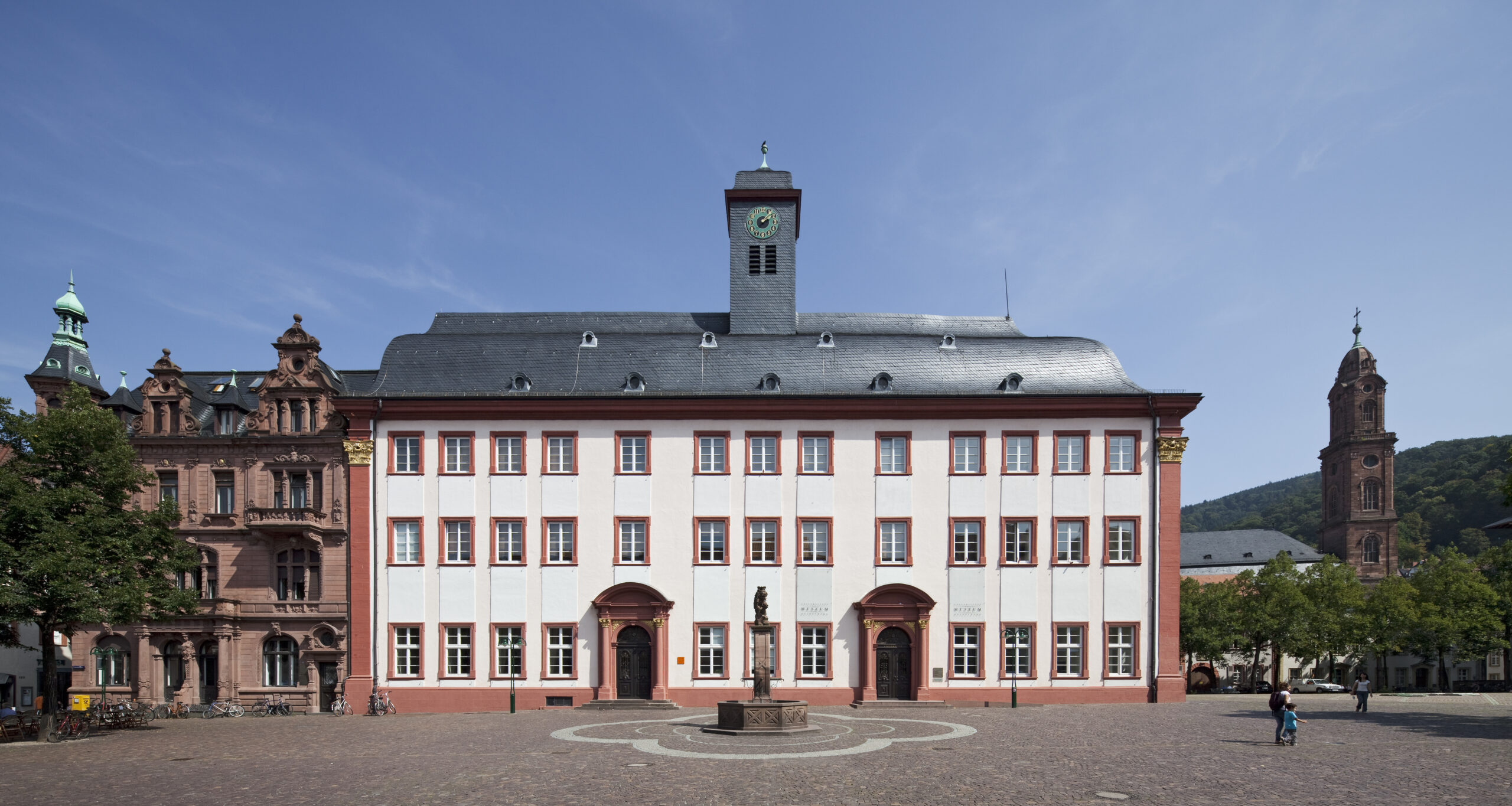
Department of Musicology, Zentrum für Europäische Geschichts- und Kulturwissenschaften (ZEGK), University of Heidelberg, Germany
SEEM gratefully acknowledges the support of BASEES and the Department of Musicology at the University of Heidelberg.
Founded in 2006, the BASEES Slavonic and East European Music Study Group (SEEM) organises regular events across the UK and abroad. SEEM brings together scholars working at the interface of musicology and Slavonic/Eastern European studies and seeks to foster international and interdisciplinary connections to support research on music and cultural life across the region.
Our 2026 colloquium will celebrate the 20th anniversary of SEEM’s foundation. It is intended to provide an opportunity to reflect upon the current state of research on music and musical life across Eastern Europe and the former Soviet space.
We invite proposals on the following topics:
- The development of musicology in Slavonic/Eastern European countries after 1991
- Music historiography and musicological traditions in Slavonic/Eastern European countries
- Post-Soviet cultural identity in Slavonic/Eastern European countries
- Musicological networks and institutions in Slavonic/Eastern European countries
- Nationality as a paradigm in contemporary Slavonic/Eastern European music
- The reassessment and decolonialisation of former Soviet repertoires since the dissolution of the USSR
We also welcome proposals for presentations on cognate topics beyond these themes, and are especially interested in featuring contributions on subjects that have received limited attention in English-language scholarship.
The event is open to researchers at any career stage, including postgraduate researchers and independent scholars. The working language of the conference will be English.
Abstracts of no more than 250 words and short biographical notes (c.100 words) should be sent to reemstudygroup@gmail.com by Friday 17 April 2026. Notifications of acceptance will be sent in mid-May.
We hope to be in a position to offer small bursaries to graduate students and presenters without access to institutional support. If you wish to be considered for a bursary, you should indicate this in your covering letter when submitting your abstract. Please be aware that our funds are limited and it is unlikely that we will be able to cover participants’ costs in full.
The colloquium will be conducted in alignment with BASEES’ current policies on participation in its annual conferences and research events. We welcome all students and scholars who oppose Russia’s war on Ukraine. Anyone supporting Russia’s war, or justifying it in any way, will not be welcome. Colleagues based in Russia or Belarus will participate in a personal capacity. BASEES’s anti-harassment policy will apply.
SEEM co-convenors: Daniel Elphick, Christoph Flamm, Christina Guillaumier, Katerina Levidou, Ivana Medić, and Patrick Zuk.
Enquiries should be sent to reemstudygroup@gmail.com
Event format: In-person only.
Call for Papers
GLOBAL REACH OF SERBIAN ART MUSIC IN THE FIRST QUARTER OF THE 21st CENTURY
Scientific Conference
26-27 November 2026
Venue: Serbian Academy of Sciences and Arts, Novi Sad Branch.
Organisers: Serbian Academy of Sciences and Arts (SASA) – Novi Sad Branch; Department of Arts SASA; Academy of Arts, University of Novi Sad; Institute of Musicology SASA, Belgrade
The scientific conference “Global Reach of Serbian Art Music in the First Quarter of the 21st Century” is dedicated to the various forms of representation of Serbian art music within international frameworks from the year 2000 to the present. The focus is on an analytical examination of the ways in which the works of Serbian composers are featured in contemporary musical life, primarily within institutionalized contexts. The objective of the symposium is not the axiological ranking of individual authors or compositions, but rather a methodologically grounded consideration of the conditions, models, and forms of their international visibility. Particular attention will be paid to identifying the institutional, programmatic, and discursive frameworks through which this visibility is achieved, as well as analyzing the diverse modes of reception of Serbian art music within a contemporary global context.
The conference stems from the eponymous three-year scientific project, implemented since early 2026 under the auspices of the Serbian Academy of Sciences and Arts (SASA) – Department of Arts, Novi Sad Branch. As such, it represents an inaugural event that will bring together domestic and international experts and researchers in the field of musical arts.
Particular emphasis will be placed on themes that problematize the synchronic and diachronic dimensions of international affirmation. This includes the localization and categorization of historical and contemporary reference points within art music – such as representative concert venues, prestigious awards, significant commissions, relevant critical literature, publications, encyclopedias, leading ensembles, conductors, and creative collaborators. Given the absence of systematic, methodologically grounded research that would integrate these phenomena into a coherent axiological matrix, this scientific symposium serves as a foundational starting point for all future research aimed at mapping the artistic achievements of Serbian composers at the beginning of the 21st century. Furthermore, it seeks to examine these achievements through genealogical links with historical predecessors, mentors, and seminal works, aiming to reveal the existence of artistic continuity, despite socio-cultural and identity-based discontinuities.
Thematic areas for paper proposals:
- The presence of Serbian composers in international artistic discourse, and their positioning within global concert institutions, festivals, juries, and educational establishments as mechanisms of canonization;
- Representation of Serbian composers in international databases, archives, monographs, and encyclopedias;
- Works of Serbian composers published internationally;
- Cultural policy and institutional frameworks: influences exerted through processes of programmatic selection and curation;
- Reception of the works of Serbian composers in foreign music criticism, scholarly periodicals, program bulletins, and related publications;
- Collaboration of Serbian composers with eminent performers, ensembles, and conductors;
- The digital presence of Serbian composers: media promotion, social networks, specialized portals, and online artistic identification;
- Contribution of Serbian composers to contemporary musical paradigms and trends;
- Global reach of Serbian art music through awards as a source of symbolic legitimacy;
- Genealogical links and continuities: historical models, mentors, and contemporary Serbian composers;
- Semiotic interpretation of Serbian art music in performative practices;
- Pedagogical contributions of Serbian composers: impact on international curricula and the formation of new generations of musicians;
- Comparative analysis: Serbian art music in relation to other Eastern European or post-Yugoslav musical traditions;
- Gender and identity perspectives in the internationalization of Serbian art music;
- Ecological and social themes in contemporary works by Serbian composers and their global resonance;
- Other thematically relevant areas.
Presentation formats and session timing:
- Oral presentations
- 20-minute papers followed by 10-minute discussions.
Deadline for submission of paper titles and abstracts:
Abstracts of up to 1,000 characters and 5 keywords should be submitted by 15 May 2026 to the organizer’s email address: sum21vek@gmail.com.
The proposal should include: full name of the author, institutional affiliation, email address and a short biography (up to 100 words).
Proposals should be sent in Serbian or English.
Deadline for the notification of acceptance: 15 June 2026
Deadline for submission of final paper for publication: 31 March 2027
Official language of the conference: Serbian and English
There is no registration fee for participating in the conference.
Detailed information will be sent throughout 2026. For any additional inquiries, please contact the conference organizer at: sum21vek@gmail.com.
Scientific Committee:
Aleksandra Vrebalov, Corresponding Member of the Department of Arts, Serbian Academy of Sciences and Arts (SASA); Full Professor, Department of Composition, Academy of Arts, University of Novi Sad; Academician Jelena Jovanović, PhD, Full Member and Deputy Secretary of the Department of Arts, SASA; Principal Research Fellow and Director of the Institute of Musicology SASA; Laura Emery, PhD, Associate Professor, Emory University, Atlanta, USA; Mirjana Veselinović-Hofman, PhD, Professor Emerita, Faculty of Music, University of the Arts in Belgrade; Melita Milin, PhD, Principal Research Fellow (Retired), Institute of Musicology SASA; Sonja Marinković, PhD, Professor Emerita, Faculty of Music, University of the Arts in Belgrade; Katarina Tomašević, PhD, Principal Research Fellow (Retired), Institute of Musicology SASA; Jelena Novak, PhD, Assistant Professor, CESEM (Centre for the Study of the Sociology and Aesthetics of Music), NOVA University Lisbon, Portugal; Tatjana Marković, PhD, Austrian Centre for Digital Humanities and Cultural Heritage, Austrian Academy of Sciences, Vienna, Austria; Ivana Medić, PhD, Principal Research Fellow, Institute of Musicology SASA; Biljana Milanović, PhD, Senior Research Associate, Institute of Musicology SASA; Nataša Crnjanski, PhD, Full Professor, Academy of Arts, University of Novi Sad; Nemanja Sovtić, PhD, Associate Professor, Academy of Arts, University of Novi Sad; Ivana Miladinović Prica, PhD, Assistant Professor, Faculty of Music, University of Arts in Belgrade; Aleksandra Paladin, PhD, RTS Music Production / Assistant Professor, Faculty of Contemporary Arts in Belgrade; Marija Maglov, PhD, Research Associate, Institute of Musicology SASA; Monika Novaković, PhD, Research Associate, Institute of Musicology SASA.
Organising Committee:
Aleksandra Vrebalov, Corresponding Member of the Department of Arts, Serbian Academy of Sciences and Arts (SASA); Full Professor, Department of Composition, Academy of Arts, University of Novi Sad; Academician Jelena Jovanović, PhD, Full Member and Deputy Secretary of the Department of Arts, SASA; Principal Research Fellow and Director of the Institute of Musicology SASA; Nataša Crnjanski, PhD, Full Professor, Academy of Arts, University of Novi Sad; Nemanja Sovtić, PhD, Associate Professor, Academy of Arts, University of Novi Sad; Bojana Radovanović Šuput, PhD, Research Associate, Institute of Musicology SASA; Marija Golubović, PhD, Research Associate, Institute of Musicology SASA; Miloš Marinković, PhD, Research Associate, Institute of Musicology SASA; Ivana Nožica, MA, Teaching Assistant, Academy of Arts, University of Novi Sad.
Call for Papers
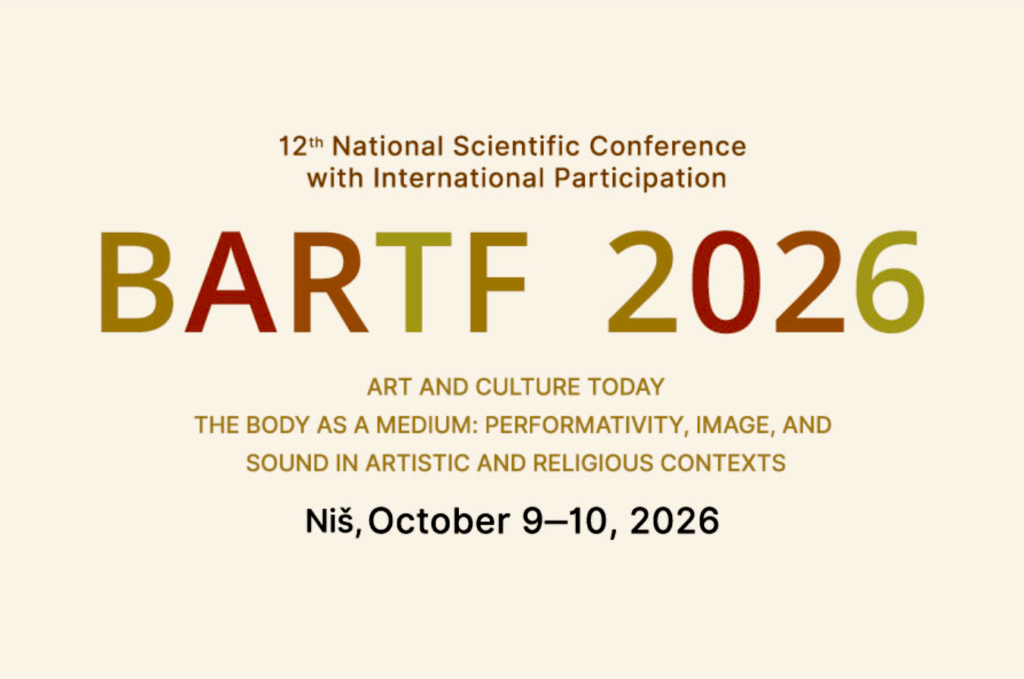
BALKAN ART FORUM — BARTF 2026: ART AND CULTURE TODAY: THE BODY AS MEDIUM – PERFORMATIVITY, IMAGE, AND SOUND IN ARTISTIC AND RELIGIOUS CONTEXTS
XII National Scientific Conference with International Participation
9–10 October 2026
Venue: Faculty of Arts, University of Niš, Serbia
The Faculty of Arts of the University of Niš, in cooperation with the Serbian Academy of Sciences and Arts (SANU) Branch in Niš, is organizing the twelfth national scientific conference with international participation, Balkan Art Forum (BARTF 2026). We invite interested parties to submit presentation proposals and participate in the conference.
The theme of this year’s conference opens a space for interdisciplinary considerations regarding the role of the body as a medium of artistic expression across various artistic, cultural, and religious contexts. The forum is open to diverse methodological and disciplinary approaches in the study of contemporary artistic and cultural phenomena.
About the Forum
The Balkan Art Forum brings together artists, theorists, educators, and researchers from various fields of art and humanities, both locally and internationally, encouraging the exchange of ideas, experiences, and modern approaches to artistic practice and its theoretical reflection.
Conceived as an interdisciplinary forum, BARTF connects artistic creation, theoretical thought, and contemporary cultural studies, with particular attention paid to the relationship between art, culture, and society, as well as new perspectives in researching artistic phenomena.
The conference has a long-standing tradition in Niš. Over its previous editions, it has established itself as a meeting point for domestic and international researchers. Papers presented at the conference will be published in a peer-reviewed Balkan Art Forum proceedings.
The program includes plenary lectures by distinguished artists and researchers from the international academic community, as well as a thematic panel dedicated to the analysis of creative opuses within the context of the conference theme.
SUBMISSION & PARTICIPATION DETAILS
- Participation Format: The conference will be organized in a hybrid format (In-person and Online).
- Presentation Duration: 15–20 minutes.
- Working Languages: Serbian, English, and Slavic languages.
- Submission Deadline (Abstract): 17 August 2026.
- Include the title and an abstract (up to 250 words and 5 keywords).
- Must be submitted in both the language of the presentation and English.
- Email to: bartf@artf.ni.ac.rs
- Application Form: Available on the Faculty of Arts Website http://www.artf.ni.ac.rs/lat/balkan-art-forum/#1518604800307-beb55493-a76f
- Notification of Acceptance: 1 September 2026.
For all necessary information, please contact the organizers at: bartf@artf.ni.ac.rs
Program Committee of the XII National Scientific Conference with International Participation – Balkan Art Forum (BARTF) 2026: Dr. Nebojša Todorović, musicologist, Professor Emeritus of the Faculty of Arts, University of Niš, Republic of Serbia, President; Dr. Sonja Cvetković, musicologist, Full Professor at the Faculty of Arts, University of Niš, Republic of Serbia; Mr. Perica Donkov, academic painter, Professor Emeritus of the Faculty of Arts, University of Niš, Republic of Serbia; Zoran Ilić, applied artist, Professor Emeritus of the Faculty of Arts, University of Niš, Republic of Serbia; Dr. Cenka Ivanova, comparative linguist, Honorary Professor Emeritus of the University of Veliko Tarnovo, Republic of Bulgaria; Dr. Predrag Cvetičanin, sociologist, Full Professor at the Faculty of Arts, University of Niš, Republic of Serbia; Dr. Divna Vuksanović, philosopher, Full Professor at the Faculty of Dramatic Arts, University of Arts in Belgrade, Republic of Serbia; Dr. Ivana Medić, musicologist, Principal Research Fellow at the Institute of Musicology of the SASA (Serbian Academy of Sciences and Arts), Republic of Serbia; Dr. Danka Lajić Mihajlović, ethnomusicologist, Principal Research Fellow at the Institute of Musicology of the SASA, Republic of Serbia; Dr. Nataša Crnjanski, music theorist, Full Professor at the Department of Composition and Theoretical-Artistic Subjects, Academy of Arts, University of Novi Sad, Republic of Serbia; Mr. Ana Matić, graphic designer, Full Professor at the Faculty of Fine Arts in Cetinje, Montenegro; Dr. Nikola Dedić, art historian and theorist, Full Professor at the Faculty of Music, University of Arts in Belgrade, Republic of Serbia; Dr. Srđan Teparić, music theorist, Associate Professor at the Department of Music Theory, Faculty of Music, University of Arts in Belgrade, Republic of Serbia; Dr. Ana Hofman, ethnomusicologist, Principal Research Fellow at the Institute of Cultural and Memory Studies of the Research Centre of the Slovenian Academy of Sciences and Arts, and Associate Professor at the ZRC SAZU Graduate School, Ljubljana, Slovenia; Mr. Adela Zejnilović, graphic designer, Associate Professor at the Faculty of Fine Arts in Cetinje, Montenegro; Dr. Marija Vujović, media theorist, Associate Professor at the Department of Communicology and Journalism, Faculty of Philosophy, University of Niš, Republic of Serbia; Mr. Sandro Drinovac, graphic designer, Associate Professor at the Academy of Fine Arts, University of Sarajevo, Bosnia and Herzegovina; Dr. Mia Arsenijević, academic painter, art and media theorist, Associate Professor at the Faculty of Education in Jagodina, University of Kragujevac (Field: Fine Arts with Methodology), Republic of Serbia; Dr. Dušan Milenković, philosopher, Assistant Professor at the Faculty of Philosophy, University of Niš, Republic of Serbia; Dr. Tijana Lukić, art and media theorist, music editor and journalist at Radio Television of Serbia, Republic of Serbia.
Call for Papers
1991: FALL OF COMMUNISM AND ITS IMPACT ON MUSIC AND THE ARTS
International Conference
28-30 May 2026
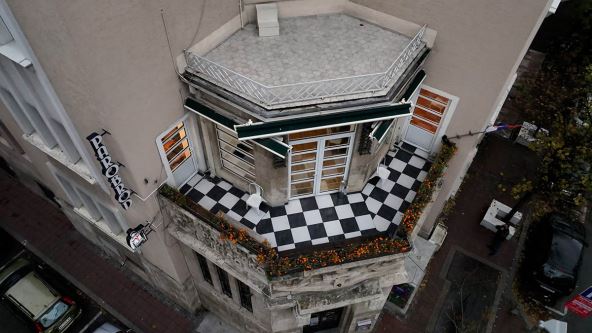
Venue: Cultural Center Parobrod (Belgrade, Serbia), in collaboration with the Faculty of Media and Communications, Singidunum University (Belgrade, Serbia); co-sponsored by Emory University (Atlanta, Georgia, USA)
Keynote Speakers:
Peter Schmelz (Johns Hopkins University, USA)
Martha Sprigge (University of California, Santa Barbara, USA)
Melita Milin (Institute of Musicology at the Serbian Academy of Sciences and Arts, Serbia)
Miško Šuvaković (The Faculty of Media and Communications, Serbia)
Mirjana Veselinović-Hofman (Faculty of Music at the University of Arts in Belgrade, Serbia)
The fall of communism was a series of liberal democracy movements in the late 1980s and early 1990s that led to the collapse of communist governments in the Eastern Bloc, symbolized by the tearing down of the Berlin Wall in 1989, followed by the dissolution of the Soviet Union in 1991. The dismantling of the Iron Curtain has radically altered the global balance of powers, shifted geopolitical reordering, and transfigured the European sense of agency and belonging. Other such events to follow the collapse of the Soviet Union and European Communism were the Yugoslav Wars of the 1990s, leading to the disintegration of the political state, and more recent chains of conflicts challenging collective identities stretching back to the Second World War. Such reordering across the continent has led individuals and communities to reconsider their relations to each other and to their histories in ways that are quickly generating new perspectives on the past and the present, and on how expressions of culture can both nurture and contest relations with others and the broader world.
The three-day conference examines the impact of the fall of communism—the geopolitical reorderings and the redefined senses of identities, borders, and belonging—in music and the arts. This conference aims to capture this moment of reimagining as it reshapes the study and making of music and art by creating a forum for humanistic and artistic inquiry.
We welcome a wide range of topics and discourses in the fields of music, arts, architecture, and closely related humanities. We especially welcome themes about:
• music, art, and nationalism
• music, art, and national identity
• postcolonialism in Eastern and Central European culture
• decolonization of Eastern and Central European music and art
• the impact of the disintegration of Yugoslavia on music and the arts
• legacy of conflict in the artistic sphere
• post-communist challenges and their impact on the cultural sphere
Formats: individual papers (20 minutes); themed sessions (3–4 papers, 20 minutes each); lecture-recitals (30–60 minutes).
The official conference language is English.
Please send abstracts (250–300 words) to Laura Emmery (laura.emmery@gmail.com) by 15 January 2026. In your submission, please include your name, any institutional affiliation, and any audiovisual requirements. For themed sessions, please submit all abstracts together with an additional proposal describing your session theme (100 words). The conference committee will review all submissions and inform the participants by 15 February 2026.
Conference fee: €80 for affiliated scholars, €50 for independent researchers, €40 for students. The conference fee includes free entry to all concerts organized during the conference.
Programming Committee:
Laura Emmery, Chair (Emory University, USA); Miloš Bralović (Institute of Musicology at the Serbian Academy of Sciences and Arts, Serbia); Žarko Cvejić (The Faculty of Media and Communications, Serbia); Anna Dalos (Institute for Musicology in Budapest, Hungary); Dalibor Davidović (Music Academy at the University of Zagreb, Croatia); Marija Dumnić Vilotijević (Institute of Musicology at the Serbian Academy of Sciences and Arts, Serbia); Pauline Fairclough (University of Bristol, UK); Kevin Karnes (Emory University, USA); Jānis Kudiņš (Jāzeps Vītols Latvian Academy of Music, Latvia); Ivana Medić (Institute of Musicology at the Serbian Academy of Sciences and Arts, Serbia); Ivana Miladinović Prica (Faculty of Music at the University of Arts in Belgrade, Serbia); Marija Pavlović (Cultural Center Parobrod / University “Union-Nikola Tesla,” Serbia); Christoph Schuller (Ludwig-Maximilians Universität München, Germany); Ruta Stanevičiūtė (Lithuanian Academy of Music and Theatre, Lithuania).